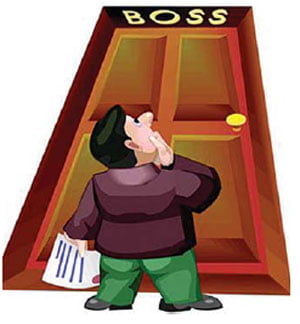
If you were an employer,which kind of worker would you prefer to hire; an inexperienced worker at a lower salary or an experienced worker at a higher salary?
Use specific reasons and details to support your answer.
Business people like to say,“You get what you pay for.”
That principle applies to products,certainly.
A well-made product usually costs more than a poorly made product.
If you want a good product,you have to pay more for it.
The same is true of employees.
An experienced worker is a more valuable employee than someone less experienced.
Therefore an experienced worker should receive a higher salary.
That is why I prefer to hire an experienced worker,even if he or she costs a little more.
Yet,business people tend to ignore this principle when hiring employees.
They tend to favor less experienced workers because such workers can be paid less.
Then the company (in theory) will make more money by paying less in salaries.
This is a short-sighted approach.
It may improve profits in the short term but is likely to hurt the company in the long run,because businesses get the kind of worker they pay for.
Low wages mean unskilled workers,poorer products and service,and long-term failure.
Higher wages mean better workers,better products and services,and long-term success.
You have to pay slightly more for experienced workers,but the extra expense is worth it.
Here is an illustration from recent history.
In the 1990s,American business practiced ‘downsizing’ to inflate profits.
Companies wanted low-paid,inexperienced workers because they could be paid less.
Experienced workers were at a disadvantage.
They were fired or retired early.
This strategy failed.
Companies’ profits did not improve greatly.
‘Junk workers,’ low-paid and inexperienced,could not do their jobs very well.
Products and services deteriorated.
The lesson here was plain.
Thus,a company should hire the experienced whenever they are needed.
▶ Korean :
사업가들은 “투자하는 만큼 얻으리라” 말하곤 한다.
이러한 원리는 확실히 제품에 적용된다.
잘 만든 제품이 그렇지 못한 제품보다 비용이 더 드는 것은 사실이다.
만약 좋은 제품을 원한다면 더 많이 지불해야만 한다.
직원들도 마찬가지이다.
경험이 풍부한 직원은 경험이 적은 직원보다 더 귀중한 것이다.
그러므로 경험이 풍부한 직원이 더 많은 월급을 받아야만 한다.
더 많은 비용이 지불되더라도 경험이 풍부한 직원을 고용하는 것이 더 낫다는 이유이다.
그러나,사업가들은 직원을 고용할 때 이러한 원리를 무시하는 경향이 있다.
그들은 낮은 월급을 지불해도 된다는 이유로 경험이 적은 직원을 고용하는 경향이 있다.
이로 인해 이론상으로 회사는 적은 월급을 지불함으로써 더 많은 돈을 벌 수 있을 것이다.
이것은 단기적인 접근 방식이다.
이것은 단기적으로 이익을 창출하겠지만 장기적인 안목으로는 회사를 망하게 하는 것이다.
적은 월급을 지불한다는 것은 미숙한 직원들,낮은 품질의 제품과 서비스를 의미하므로 장기적으로는 실패를 의미한다.
높은 월급을 지불한다는 것은 경험이 풍부한 직원들,좋은 품질의 제품과 서비스를 의미하므로 장기적으로는 성공을 의미한다.
경험이 풍부한 직원을 고용하기 위하여 조금 많이 지불한다고 해도 그러한 추가비용의 가치는 충분하다.